
Meme Coins - The Honest Map

And one sentence that has to sit above this entire post: This is a map, not an invitation. Germany’s financial regulator BaFin officially frames meme coins as “gambling, not investing” - and after everything you’re about to read, that’s the friendly phrasing. I’m explaining the casino. I’m not sending you in.
No corner of the crypto space gets laughed at like meme coins - and none gets underestimated like them: as market structure, as a money machine for the few, as culture. If you want to understand the space, you have to understand this part, precisely because it has no fundamentals. There is only attention, speed and distribution here - and all three can be mapped.

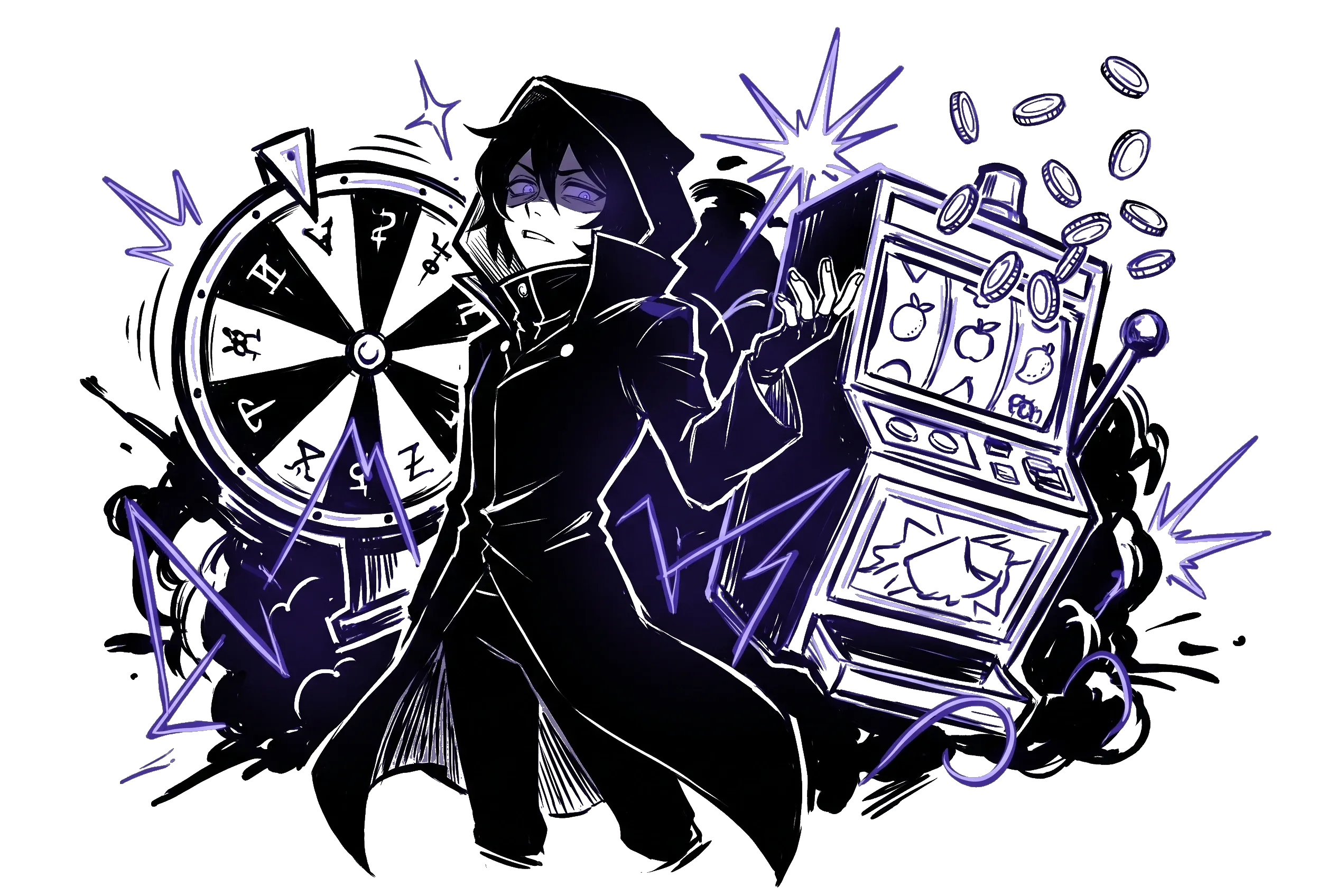
Illustrative image, AI-generated.
From joke to market: the short history
2013: Billy Markus and Jackson Palmer launched Dogecoin explicitly as a parody - crypto was being “taken too seriously.” 2021: the parody became a mass phenomenon: Reddit traders drove DOGE up over 400 percent in 24 hours; the all-time high came on May 8, 2021 at around $0.73 - and collapsed by up to 30 percent during Elon Musk’s SNL appearance. The high was never seen again; “sell the news” as a textbook case. SHIB replayed the same curve that autumn.
2024: pump.fun industrialized the genre: token creation in under a minute, for a few dollars, no code. Roughly 12 million tokens created by early 2026, over 150 billion dollars in cumulative trading volume, and the first Solana app past one billion dollars in cumulative revenue (milestone: March 2026). January 2025: politics arrived: the TRUMP coin jumped within two days to a high of roughly $73 (CoinGecko; other indices cite ~$75) - 80 percent of the supply sits with Trump-affiliated companies, documented all the way into official Senate letters. The balance sheet after a year and a half, told in full: per Nansen analyses, nearly 989,000 wallets sit on a combined 3.8 billion dollars in losses, while some 500,000 wallets realized about 4 billion in gains and the Trump entities took in more than 1.4 billion via fees and sales (Nansen/CoinDesk analysis, July 2026). The coin trades about 98 percent below its high. February 2025: LIBRA - more below; it is the genre’s most important case.
And today? The bear market hit here too, only harder: the total meme market capitalization sits at around 25 billion dollars as of July 23, 2026 - about 83 percent below the December 2024 peak of 150.6 billion (own calculation from CoinGecko data) and just over 1 percent of the total crypto market. The machine keeps running, but smaller: pump.fun still made 124.7 million dollars in revenue in Q1 2026 (Cointelegraph/Token Terminal data; 36 percent of all Solana app revenues), while the graduation rate - coming up - collapsed to about 0.26 percent.
The map: what the scene actually uses
Now for what you actually wanted to know - the concrete infrastructure, as of July 2026, every mention neutrally descriptive with the risk right beside it. Not a single link here is an affiliate link, and none is a recommendation.
Chains. Meme trading lives on Solana today: in early July 2026, about 31 million active addresses and ~13.6 billion dollars in weekly DEX volume - #1, driven by meme trading. BNB Chain is the clear #2 (its launchpad: Four.meme, migrating to PancakeSwap); Base plays only a side role after the Zora back-and-forth. This ranking historically rotates fast - it is a snapshot, not a truth.
Launchpads. pump.fun dominates: every token starts on a bonding curve - the smart contract itself is the buy and sell counterparty, and the price rises deterministically with every buy. Once the curve reaches about 85 SOL (~$69,000 market cap), the token “graduates” automatically into a liquidity pool - since March 2025 on pump.fun’s own DEX PumpSwap, no longer Raydium. Fees have been dynamic since September 2025 (roughly 0.95 percent for small tokens, falling to 0.05 percent for large ones; with creator fee sharing since January 2026). #2 is LetsBonk from the BONK community - which briefly overtook pump.fun in July 2025 and fell back to single-digit share within weeks. Note what that means: even the platform layer of this market swings by 90 percentage points in weeks. Legal margin: the UK’s FCA blocked pump.fun for UK users, and a class action alleging sales of unregistered securities is running in New York - allegations, no verdict.
DEXs & frontends. Swaps route through Jupiter (the dominant Solana aggregator, spanning dozens of DEX programs), Raydium (which built its own launch framework, LaunchLab, after the PumpSwap split), and increasingly through web terminals like Axiom, which in 2025 pulled over half of Solana spot volume to itself within months; a generation of mobile trading apps is growing alongside. Important: these terminals also run hosted trading wallets - the same key risk as the bots, just with a prettier interface.
Telegram bots. The names you’ll hear: Trojan, BONKbot, Maestro, Banana Gun, Bloom. They can do what wallets can’t: sniping in the first second, copy trading, auto-buy, limit orders - for roughly 1 percent per trade. The central risk sits in the architecture: the bot creates your trading wallet server-side and holds its private keys. Whether the provider protects or deletes them, you cannot verify. This is not theoretical: in 2023, Maestro’s router contract was exploited (~280 ETH in damage); in 2024, about 3 million dollars were stolen from Banana Gun wallets. Both providers refunded fully out of their own pockets - honorable, but “the big ones have refunded so far” is an observation, not a claim you hold. The scene’s documented practice: only a separate wallet with a small amount in the bot.
Wallets. The standard is Phantom (a hot wallet; in-app swaps cost extra). The real hygiene rule matters more than the brand: burner wallets - for mints, unknown contracts and bot trading, a throwaway wallet with a small amount, never linked to your main wallet. A malicious contract then costs the burner amount, not the portfolio. (Self-custody basics: in the getting-started guide.)
Screeners & checking tools. DexScreener is the standard for pairs, charts, liquidity - and simultaneously sells visibility: token profiles and “boosts” are paid advertising products; one analysis of boosted tokens found an average of −48 percent, and the scene’s shorthand “DEX paid” means only that someone paid a few hundred dollars. Birdeye aggregates Solana data (holder distribution, smart-money tracking). Rug-check tools scan on-chain risks: active mint authority (creator can inflate supply), freeze authority (sales can be blocked), holder concentration, LP burned or not. What no tool sees: insiders with many inconspicuous wallets, off-chain coordination, orchestrated dumps. The proof sits one floor below: a 93 percent soft-rug rate despite freely available checkers.
The machinery you don’t see
The chart of a fresh meme coin looks like a market. It isn’t one - it’s a stage, and machinery runs behind it:
- Block-0 sniping. Per a Pine Analytics report, over half of pump.fun launches get bought in the very creation block - by bots, not people. The most insidious pattern: in a small but highly profitable share of launches (~1.75 percent), the deployer themselves pre-funds the sniper wallets - with an 87 percent success rate. A preprint study additionally found over 1,000 persistent wallet cohorts that systematically appear among the first ten buyers of new launches. If you want to be “fast,” you are not competing with other amateurs.
- Bundlers. Openly marketed tools bundle token creation and buys from dozens to hundreds of wallets atomically into one block - and advertise verbatim that the resulting distribution triggers “no red flags on analysis tools”. The creator controls the supply; the holder chart looks organic.
- MEV. The Helius MEV report documents a single sandwich program (“Vpe,” attributed by Helius to the operator “DeezNode” - roughly half of all Solana sandwiches) that extracted ~13.4 million dollars from 1.55 million sandwich attacks in 30 days. 16 of the 20 most-hit tokens came from pump.fun. The attacker’s lever is your own setting: the high slippage tolerance without which illiquid tokens wouldn’t be tradable at all.
- Honeypots. Contracts where buying works and selling doesn’t - systematically described academically since 2019. The classic: the Squid Game token in 2021, thousands of percent up on paper, ~3.3 million dollars gone, selling was never possible for regular holders.
- Rugs & soft rugs. Chainalysis: 94 percent of suspicious DEX pools were rugged by exactly the address that created them; the median time from launch to abandonment: zero days. The median damage per incident is a few thousand dollars - this is not a series of spectacular heists; it is industrialized mass production. And volume lies too: wash trading is a billions-scale phenomenon in absolute terms, concentrated exactly where fresh tokens want to fake buying interest.
The “strategies” - described, not recommended
What the scene does belongs on the map. What comes of it, too. Four patterns, each with its documented outcome:
Sniping - buying new launches in second one, selling in minutes. Outcome: see above - over half of launches are claimed in block 0 already, and only ~3 percent of pump.fun users ever realized more than $1,000 in profit. Copy trading “smart wallets” - outcome: a Management Science experiment shows copying raises risk-taking and lowers copiers’ welfare; on-chain, add that watched wallets know they’re being copied - and can sell into their own copy flow. Narrative rotation - chasing the hot theme. Outcome: in 2024 the meme sector averaged +2,185 percent; in 2025, −31.6 percent - the same most-watched narratives, opposite sign; whoever sees the rotation late buys the turn. “Only play with profits” - the house-money convention. Outcome: changes nothing about expected value, and behavioral economics has shown since Thaler and Johnson 1990 that people play riskier after wins, not more carefully.
The arithmetic under it all, said soberly once: among traders this is a zero-sum game - before costs. After platform fees (pump.fun alone: over a billion cumulative), MEV and insider sniping, the aggregate retail balance is necessarily negative; whoever wins, wins from someone. The friendliest available snapshot (CoinGecko, May 2026) shows 73 percent of active wallets in realized profit - but 65 percent of those at 1 to 500 dollars, and whoever never sold their worthless tokens isn’t counted. The long-run distribution (Dune, January 2025): 0.4 percent of wallets above $10,000 realized, 0.002 percent above a million. A peer-reviewed analysis calls the structure, dryly, “highly speculative”: retail speculation is the rule, token survival the exception.
The influencer economy
Because meme coins have no fundamentals, attention is their only value driver - the promo machine isn’t a side phenomenon; it is the core of the market. Here is what it looks like, documented:
The machine. On-chain analyst ZachXBT published a leaked campaign sheet in 2025: over 200 influencers approached, well over 100 accepted, fewer than five disclosed - fees from ~$50 to over $60,000 per post depending on reach (the client was an AI memecoin platform; the top figure is disputed by the person concerned). An industry analysis of 1,500+ promoted coins: 76 percent died (≥90 percent loss), average fee ~$399. And peer-reviewed: tweets by prominent crypto influencers are followed by short-term positive, then systematically negative returns - strongest for self-declared experts with large followings and small coins. For the base rate: per a Marketing Science study, roughly 96 percent of all sponsored posts on X are undisclosed - across all industries; crypto isn’t the outlier, it’s the norm of a broken norm.
The court-solid cases. Kim Kardashian paid 1.26 million dollars to the SEC for not disclosing the $250,000 she received for an EthereumMax post (settlement without admission); Paul Pierce followed at 1.4 million. In 2023 the SEC sued Justin Sun and, in parallel, eight celebrities - from Lindsay Lohan to Akon - over undisclosed promotion; six settled (Sun’s own case: open, allegations). The 2021 Save the Kids affair showed the pattern in the influencer milieu: Coffeezilla’s on-chain investigation documented early promoter sales of the charity-marketed $KIDS token; FaZe Clan fired one member and suspended three - no criminal or SEC case ever followed.
The two big object lessons. HAWK (December 2024): the token around “Hawk Tuah girl” Haliey Welch rose within hours to a ~$490 million valuation and lost over 90 percent; the New York class action targets the promoter companies and - since May 2025 - Welch too, who denies any wrongdoing; the SEC closed its inquiry into her without findings, per her lawyers. The complaint alleges, among other things, a $325,000 payment and a monetization agreement months before launch - complaint allegations; the presumption of innocence applies to everyone involved. LIBRA (February 2025): Argentina’s president Milei promoted the token on X; it collapsed within hours; per Nansen, 86 percent of traders realized losses (251 million combined) while ~2,100 insider/sniper wallets extracted ~180 million. Since then: criminal investigations in Argentina, a US class action against Hayden Davis/Kelsier (57.6 million USDC frozen by court order), and a November 2025 parliamentary report attributing “essential involvement” to Milei and recommending a misconduct review - while the anti-corruption office found no ethics-rules violation. All ongoing proceedings, nothing final; which is exactly why it reads this stiffly here. Incidentally: the same amended class action also covers MELANIA - Melania Trump herself is not a defendant.
That we know any of this rarely comes from authorities, by the way: the genre’s informal oversight are on-chain forensics like Coffeezilla and ZachXBT, whose wallet investigations regularly trigger the reporting, lawsuits and proceedings in the first place. Every transaction is public - that is this market’s one structural honesty.
Law and taxes, compact (EU/Germany)
- MiCA: meme coins are generally “other crypto-assets” - a public offer in principle triggers a white-paper duty. The practical gap: for “fair launches” without an identifiable offeror (the pump.fun standard case), buyer protection runs empty under the prevailing legal reading - the addressee of the duties is missing. In the US, SEC staff declared in February 2025 that typical meme coins are not securities (non-binding, internally disputed) - fraud remains prosecutable everywhere.
- Taxes (Germany): gains are private disposal transactions under § 23 EStG - swapping coin-for-coin counts as a sale and restarts the one-year clock; within the year, a €1,000 exemption threshold applies (breach it, and the entire gain is taxable). The Finance Ministry’s March 2025 circular demands real transaction documentation - run hundreds of bot trades and you’ve built yourself a bookkeeping duty on the side. For your situation: a tax advisor, not a blog.
- If you post yourself: since January 2026, the ESMA/BaFin finfluencer factsheet applies - paid calls must be clearly disclosed; hidden hashtags don’t cut it.
Why everyone plays anyway

Illustrative image, AI-generated.
After all these numbers, condescension would be cheap - and wrong. The research itself explains participation more soberly: pump participants largely know they’re playing a negative-expected-value game - small stake, tiny chance at a lot, structurally a lottery ticket with a group chat. The SEC describes meme coin purchases as entertainment- and community-driven; BaFin says gambling. Both fit: it is entertainment with real-money stakes and a sense of belonging - and it tips exactly at the point where someone mistakes it for investing. Marking that point is this post’s only purpose.
Meme coins are the exact opposite of what the rest of this blog stands for - patience, self-custody, long time horizons. Maybe that’s the most honest closing line: one is a slot machine, the other is a stance. The Crypto Collection celebrates the stance.
Sources and limits
This scene rotates faster than any other part of the market - platform names, market shares and fee models therefore carry dates throughout and must be re-checked against live data before any publication (CoinGecko category, Token Terminal/Dune figures, HAWK/LIBRA case statuses). Person-related cases rest exclusively on regulator primary sources (SEC press releases), court-record-based law-firm pages and broad contemporaneous reporting; lawsuits are allegations, and the presumption of innocence applies to everyone named. The scam statistics partly come from commercial compliance vendors (Solidus Labs, Chainalysis) with an interest in big numbers - pump.fun’s counter-position to the 98.6 percent figure is stated in the text. No link in this post is an affiliate link; no mention is a recommendation.
Questions, or spotted a mistake? Write to me.
Comments
Sign in to comment, like and save. Sign in →
No comments yet. Write the first one.